

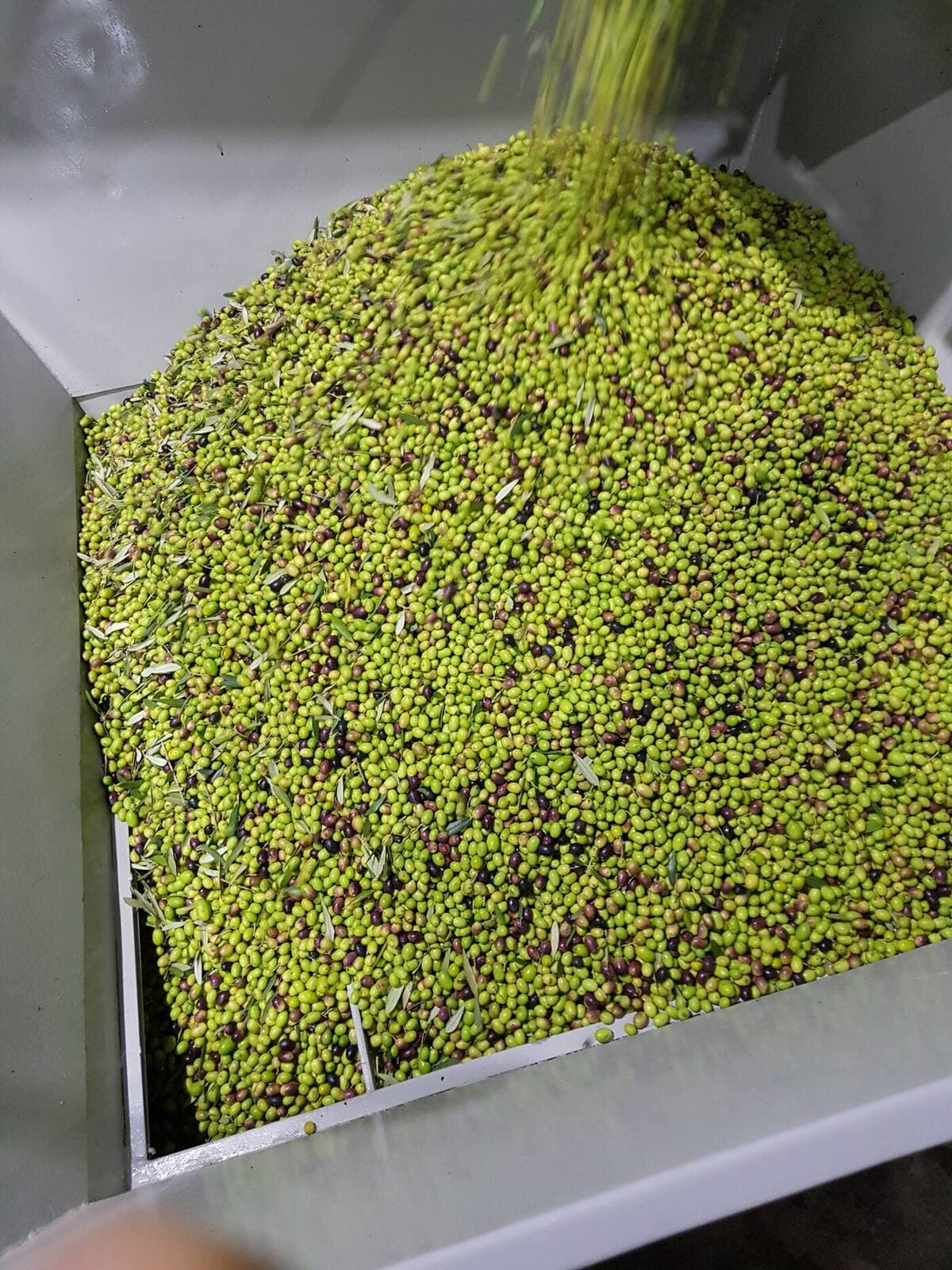
Step 1: tree and grove (year-round)
- Winter pruning (Jan-Mar): regulates the canopy, favours light, sets the harvest
- Cover crops and organic fertilising: legumes sown between trees fix nitrogen. No chemical fertilisers.
- Organic pest defence: constant monitoring of the olive fly (Bactrocera oleae), main enemy, and natural treatments (kaolin, protein baits)
Step 2: ripening (Aug-Nov)
Three key transformations:
- Chlorophyll decreases: colour passes from green to straw to violet to black
- Polyphenols peak then decline if maturation goes too far
- Oil content increases
Ideal harvest is a compromise: a bit before peak oil (for maximum polyphenols) but not too early (low yields).
Step 3: harvest (Oct-Dec)
Three methods:
- Hand-picking: top quality — no bruising — but expensive. We use it for our monovarietals.
- Mechanical combing: electric combs, olives fall on nets. Good quality/efficiency compromise.
- Tree shaking: a machine shakes the tree. Faster, more impact on the plant.
Olives must reach the mill within hours. Every hour: more polyphenols lost, more acidity. Ideal: mill every evening with that day's olives.
Step 4: the mill (same day)
- Defoliation and washing: leaves, soil, twigs removed. Modern washers include a clean-water shower.
- Crushing: hammer crushers (most common) or stone mills (traditional, rare today).
- Malaxation: paste mixed slowly for 30-40 minutes at controlled temperature below 27°C / 80°F. Critical phase: heat ruins polyphenols.
- Extraction: a centrifuge (decanter) separates oil from vegetation water and pomace. No solvents.
Golden rule: ≤ 27°C in the entire process. Legal limit to declare "cold extraction".
Step 5: filtering, storage, bottling
Filtering with cardboard filters removes mosto residues, extending shelf life. Storage in stainless steel tanks under inert gas (nitrogen or argon) prevents oxidation. Ideal cellar: 14-18°C, stable, dark. Bottling in dark glass or metal tins protects from light and oxygen.