

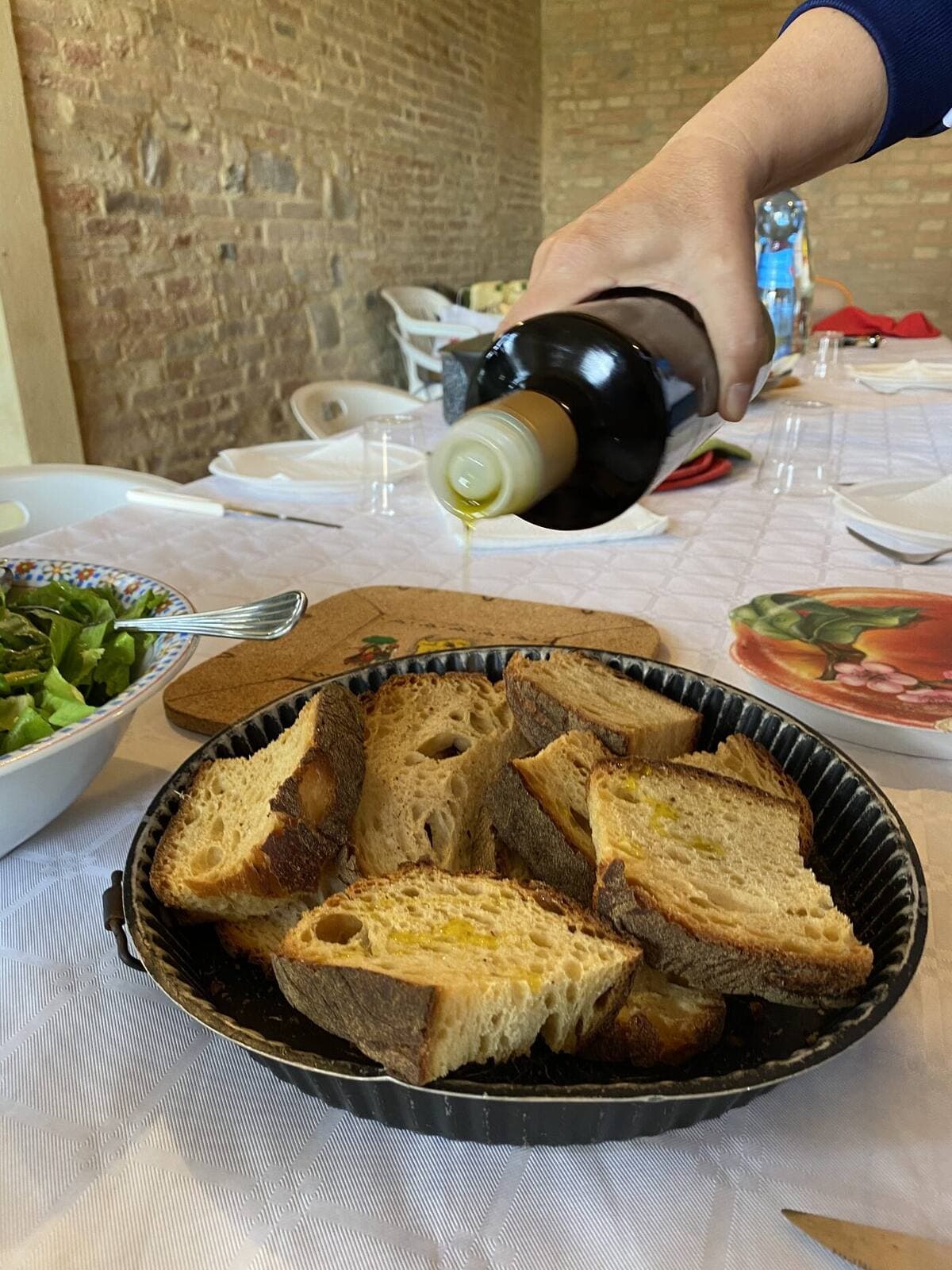
Garlic, oil, chilli pepper, spaghetti. It can't get simpler than that. Yet 90% of the "garlic and oil" you eat outside the home are mediocre. There is only one secret: use quality extra virgin olive oil. We will explain it to you step by step, how we make Cassetta at home.
Ingredients for 4 people
- 400 g of bronze-drawn durum wheat spaghetti
- 6 tablespoons (90 ml) of quality extra virgin olive oil — it is the real protagonist
- 4 cloves of garlic (preferably red garlic from Sulmona or Nubia)
- 2 dried spicy chili peppers, chopped, or 1 teaspoon of chilli powder
- Fresh parsley chopped (1 generous spoonful)
- Coarse salt for the water
No parmesan: traditionally garlic and oil are not mixed with cheese. If you want, but it's already another recipe.
The correct procedure
- Put the water to boil with coarse salt (10 g per litre). Wait until it boils well before throwing in the pasta.
- Cook the spaghettial dente, 1-2 minutes less than the time indicated on the package.
- While the pasta is cooking: heat the oil in a large pan over a low heat. Add the garlic cloves cut into slices or poached (crushed but whole).
- Golden garlic, never burnt: it must become blonde and release a scent. The exact time: 2-3 minutes on low heat. If it turns dark brown, start again.
- Add the chili pepper: 30 seconds in the hot oil, be careful not to burn it (it becomes bitter).
- Turn off the heat. Add 2 ladles of cooking water: the oil emulsifies with the starch in the water and becomes creamy.
- Drain the spaghetti al dente, pour them into the pan, sauté over high heat for 30-60 seconds. Add chopped parsley.
- Serve immediately on hot plates. A drizzle of new raw oil on top of each dish: this changes everything.
The mistakes that ruin garlic and oil
- Burning garlic: Burnt garlic is bitter. Low heat, always watch out.
- Use mediocre oil: with 4 ingredients, each ingredient counts the most. Poor oil = poor dish.
- Do not emulsify with cooking water: skip this step and the dish seems "seasoned with oil", not "creamed"
- Put parsley at the beginning: it cooks, it loses aroma. It should be added at the end of cooking.
- Overcooked spaghetti: creaming softens them further. Drain them thoroughly al dente.
The right extra virgin olive oil for garlic and oil
For this recipe we recommend an oil:
- Medium fruity: Leccino is perfect. Ortice too, but with more character - for those who love strong flavours.
- Pickling present: it goes well with the spiciness of the chilli pepper
- Fresh: lively aroma, high polyphenols
The final drizzle of oil raw on the plate makes the real difference: it brings to the table the aromas that cooking has muffled.
Variant: with breadcrumbs
The southern Italian version ("garlic and oil with breadcrumbs"):
- While the garlic is browning, toast 50g of crumbled breadcrumbs in another pan with a little oil
- At the end of cooking, sprinkle the creamed pasta with the toasted breadcrumbs
- Crunchiness + fat + starch: the dish becomes rich without weighing it down
It is the "poor" version - in the peasant sense - which becomes extraordinary with a good oil.
Frequently asked questions
Can I use garlic powder?
Not recommended. Fresh garlic releases essential oils into the fat during cooking, but powdered garlic does not. It totally changes the dish. If you don't have fresh garlic, it's better to postpone.
How much extra virgin olive oil is needed for four people?
6 tablespoons (90 ml) during cooking + a final raw drizzle. It seems like a lot but it's right: oil is the main seasoning, not a "service ingredient". With a good EVO the quantity is not greasy.
Can I make garlic and oil without chilli?
Yes, it's the "white" version. Children and delicate palates can appreciate it. Add a pinch of freshly ground black pepper instead of chili pepper, it still adds liveliness.
Can it be prepared in advance?
No. Garlic and oil should be eaten freshly made. The pasta overcooks, the oil loses its shine, the garlic sticks. If you have to make something ahead of time: prepare the golden garlic separately, keep it in the oil, and make the pasta at the last moment.
Red garlic or white garlic?
Red garlic (e.g. from Sulmona) has a more intense and sweet aroma, it is the best for this recipe. White garlic is fine though. The important thing is that it is fresh, firm, without a green shoot in the center (remove it if there is one).