

You bought a good extra virgin olive oil. Now comes the hard part: storing it well. Poor storage can ruin a quality oil in just a few weeks. Here are the most common mistakes and advice from our agronomist to enjoy the oil for months.
The three enemies of oil: light, air, heat
Three factors degrade extra virgin olive oil through oxidation, which produces rancidity (the acrid smell and stale taste of old oil):
- Light: UV rays oxidize pigments (chlorophyll → pheophytins) and polyphenols. A few weeks of direct exposure are enough.
- Air (oxygen): the main degradation factor. Every time you open the cap, part of the oil oxidizes.
- Heat: above 20°C all degradation processes accelerate significantly. Kitchen, sun, near the oven: wrong places.
The right container
For retail, quality oil comes in:
- Dark glass bottle (green, amber): filters part of the UV rays
- Metal can: the best for medium quantities (1-5 litres)
- Bag-in-box with gusseted bag: excellent for large quantities, the oil does not come into contact with the air until the last drop
From avoid: clear plastic bottles, non-airtight containers, clear glass bottles left in the light.
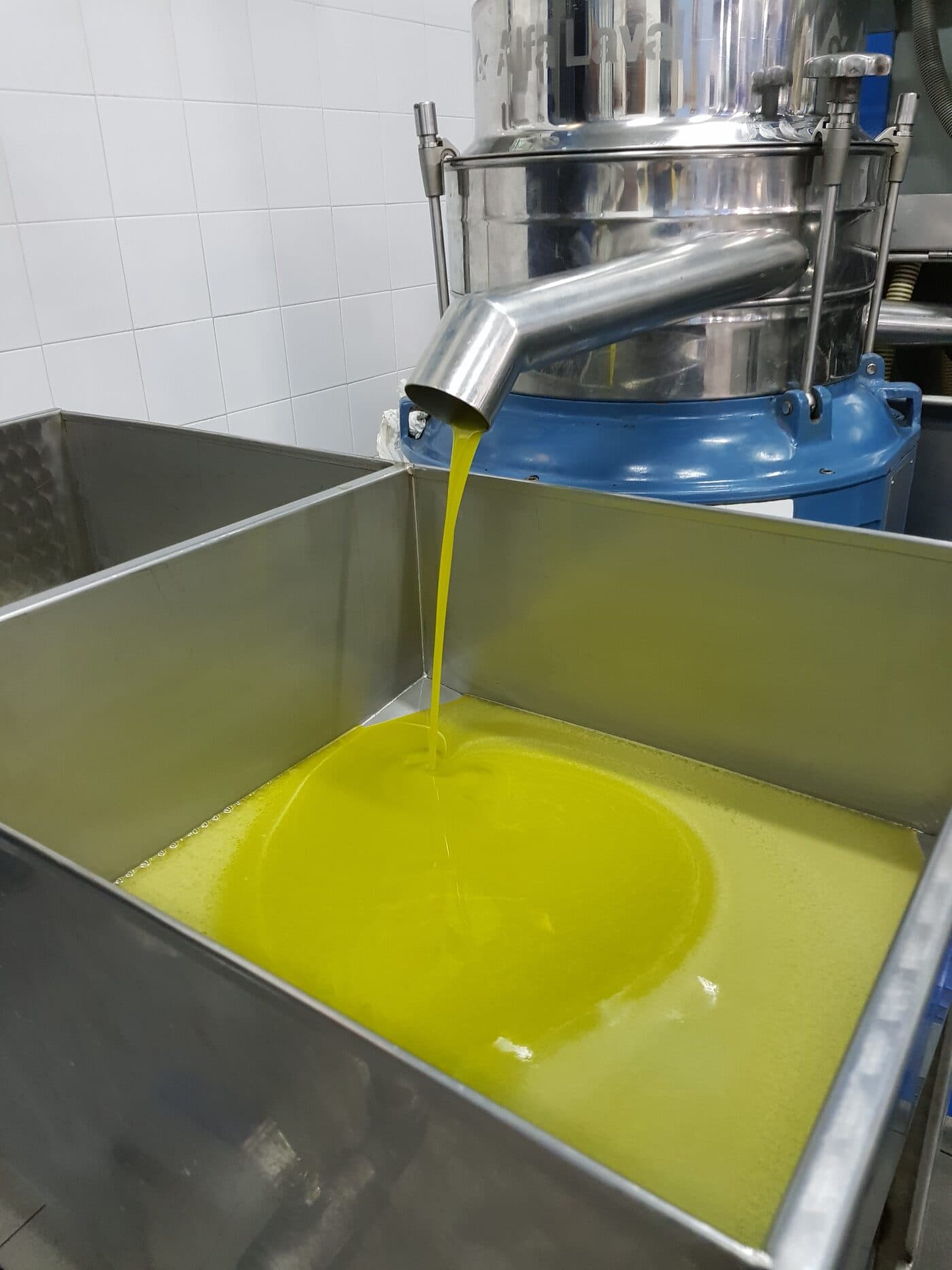
For preservation after bottling (cellar, warehouse), professionals use stainless steel tanks with hermetically sealed caps, or with covering under nitrogen or argon (inert gases that prevent oxidation).
Where to keep it at home
The golden rule: cool, dark, dry.
- Closed pantry or cellar: the best place (12-18°C, no light)
- Never on the worktop: kitchen too hot + light
- Never near the oven or stove: high temperatures
- Not in the refrigerator: the oil crystallizes (becomes white and grainy). It is not harmful but it is inconvenient: to use it you will have to wait for it to become liquid again.
- Always cap well after use. Bottles with an "always open" measuring cap: convenient, but drastically reduce shelf life.
How long does a closed bottle last
A well-preserved extra virgin olive oil in a closed bottle keeps its properties intact for:
- 18-24 months from bottling — for medium fruity oils
- 24-30 months — for oils rich in polyphenols (Ortice, Coratina, Picual) which resist better
The minimum shelf life (TMC) on the label is a conservative estimate: the oil does not "expire" suddenly, but gradually loses aromas and potency antioxidant.
How long does an open bottle last
Once opened, a bottle of EVO oil retains aromas and properties for 3-4 months at most. Afterwards, it is still usable but the fruitiness fades and the polyphenols decrease.
Three practical tips:
- Buy bottles of sizes suitable for your consumption: two 500 ml bottles are better than one 1 liter which you finish in 6 months
- For those who consume little: 250-500 ml cans or bag-in-box
- Do not move the oil into transparent "table" jugs: it will be ruined in a few days
Common mistakes to avoid
- Cap open for a long time: every minute longer with the bottle uncorked = more oxygen enters
- Transparent glass carafe on the kitchen table: light + air, the oil will ruin in a few days
- Near the stove "for convenience": excessive heat
- Wash the containers with vinegar or scented detergents: absolutely to be avoided, they cause odors unpleasant to the oil
- Mix old oil and new oil: the old oil ruins the new one much more than the new one improves the old one
Frequently asked questions
Can extra virgin olive oil be stored in the refrigerator?
Technically yes, but it crystallizes and becomes white and grainy. It is a physical variation, not a defect. Once it returns to room temperature it recovers its liquid state. In practice: keep it in a cool pantry, not in the fridge.
How long does extra virgin olive oil last once opened?
It maintains aromas and antioxidant power for 3-4 months if stored well (corked, in a cool place, in the dark). It remains usable for longer, but gradually loses features.
Is expired oil bad for you?
Expired oil stored correctly is not harmful, but it becomes rancid: an acrid taste, an unpleasant scent. It is no longer pleasant to consume. Better to use it for light frying or recycling it, but not for raw uses.
Can the bottle be washed to reuse it?
Yes, but with hot water + odorless neutral detergent. Never use vinegar or scented detergents: they leave residues that will make the oil smell. Dry well before filling.
What do "under nitrogen" or "under argon" mean regarding storage?
They are inert gases that are used to cover the surface of the oil in storage tanks. They prevent contact with oxygen and therefore oxidation. It is a technique used by the most serious producers between harvesting and bottling.