

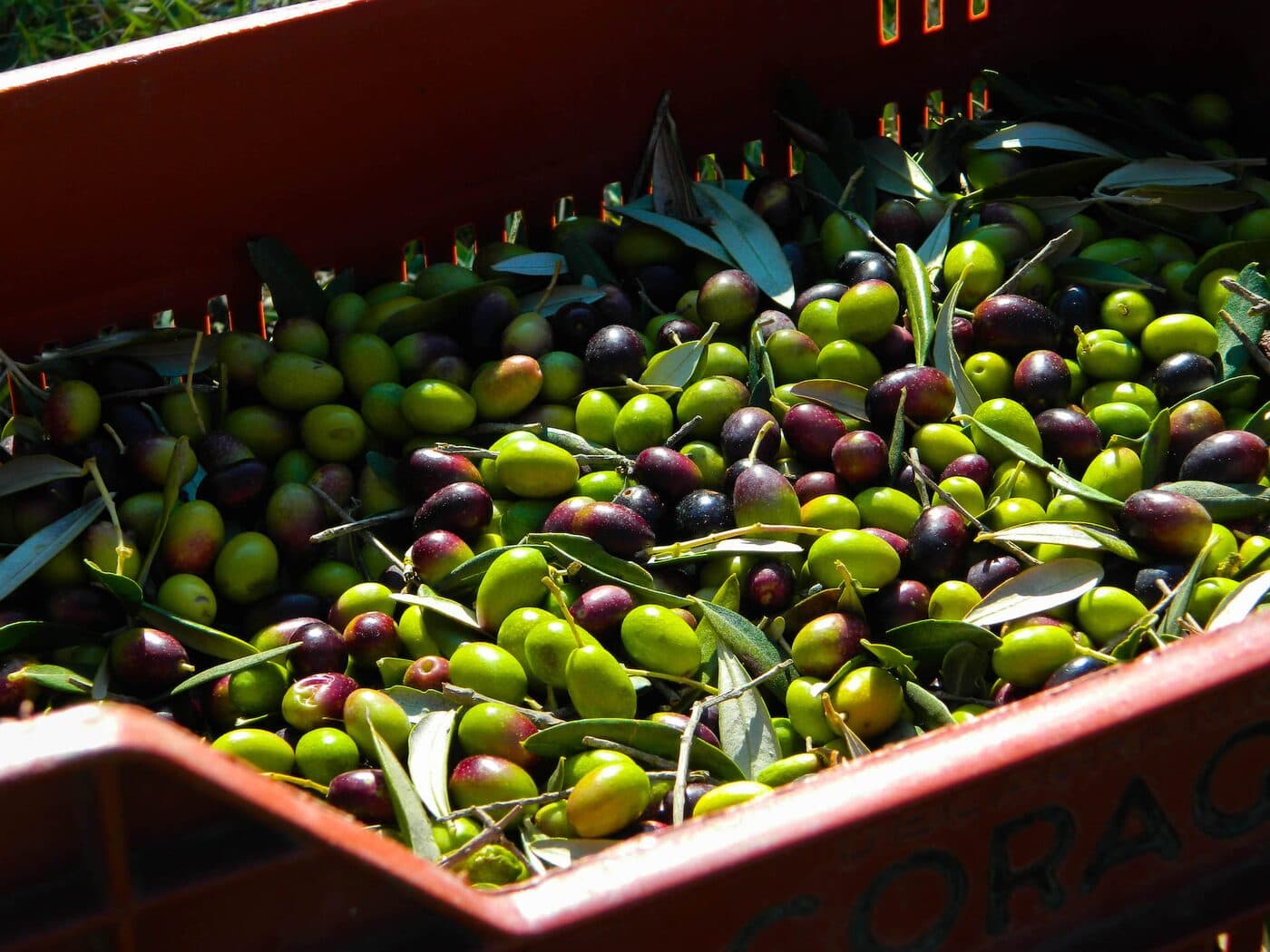
On the label of a bottle of oil you read technical words: extra virgin, virgin, olive oil. They seem synonymous, but they indicate products that are very different in origin, process and quality. We explain it to you as our agronomist does in conferences.
The two great families: virgin oils and refined oils
Olive oils are divided into two large groups:
- Virgin oils: obtained from the pressing of olives only, with exclusively mechanical processes (crushing, kneading, extraction). No chemical treatment, no solvent, no high heat.
- Refined oils: obtained with deacidification treatments (soda), deodorization (steam in autoclave), decolorization. They are industrial oils, neutral in taste, without perfume.
Only virgin oils preserve the fragrances, flavours and precious antioxidant compounds of olives.
Extra virgin olive oil — the top category
The legal parameters (Reg. EU 2568/91):
- Free acidity ≤ 0.8% (expressed as oleic acid)
- Median defects (Md) = 0: no sensory defects detected by the panel of tasters
- Median fruity (Mf) > 0: must have a perceptible olive fruity
They are strict parameters: to be extra virgin an oil must be perfect. Even a single defect (rancid, heated, moldy, fermented) declasses it.
Virgin olive oil
Always by mechanical squeezing, but with lower quality:
- Free acidity between 0.8% and 2%
- Md ≤ 3.5 (some defects tolerated)
- Mf > 0
In the retail market it is rarely found: the most serious mills work it to reach the extra virgin standard, or allocate it to the industry.
Lampante oil
It is an inedible virgin oil:
- Free acidity > 2%
- Md ≥ 3.5 (marked defects)
- Mf = 0 (no fruity)
The name comes from the ancient use as fuel for lamps. Today it is started for refining to be made edible as a refined oil.
Refined olive oil and "olive oil"
Not to be confused:
- Refined olive oil: derived from the refining of lampante. It is edible but anonymous: no perfume, no flavour, no characteristic colour.
- "Olive oil": is a blend of refined olive oil + virgin oil. The law does not specify percentages, so it can be 99% refined + 1% virgin. It is what you find in supermarkets at low prices labeled simply "olive oil".
Olive pomace oil
The pomace is the solid residue (peel, pulp, peel fragments) that remains after pressing. Oil is extracted from it using chemical solvents (hexane):
- Crude pomace oil: inedible
- Refined pomace oil: inedible
- "Olive pomace oil" (edible): refined pomace blend + virgin oil. Again, no percentages on the label.
It is the lowest category among olive oils. It costs very little, has no taste or significant nutritional properties.
How to read the label well
Summarizing, before buying:
- Look for "extra virgin olive oil": exact words, not replaced (e.g. "extra olive oil" or "extra virgin oil" are other things)
- Verification of origin: "100% Italian" or a specific area
- Declared Cultivar and Harvest Year
- «Cold extraction» or «cold pressing»
- Be wary of prices below €8-10/litre for Italian extra virgin: it is mathematically difficult to be a real EVO.
Frequently Asked Questions
What is the difference between extra virgin olive oil and olive oil?
Extra virgin olive oil is only obtained by mechanical squeezing with acidity ≤ 0.8% and perfect sensory profile. "Olive oil" is a mixture of refined + virgin without declared percentages: perfume and taste are much poorer.
What does the acidity value of an oil mean?
Free acidity (in %) measures the amount of free fatty acids: it indicates the state of preservation of the olives and the care of the process. By law an extra virgin must have acidity ≤ 0.8%; the best are below 0.3%. Caution: you do not "feel" the taste.
What are Md and Mf in oil analyses?
Md = median of defects detected by a panel of certified tasters. Mf = median of fruity. To be extra virgin: Md = 0 and Mf > 0. They are official sensory evaluations, done in the laboratory.
Does pomace oil hurt?
It is not toxic, but is obtained with chemical solvents (hexane), then refined. It is practically free of polyphenols and vitamins. Nutritionally much lower than an extra virgin.
Why does the same "extra virgin olive oil" cost from 3 to 30 euros per liter?
Low prices indicate imported industrial oils or blends of dubious provenance (even if labelled extra virgin). An Italian organic monovarietal EVO has production costs that do not fall below €12-15/litre. Below this threshold, something is wrong.